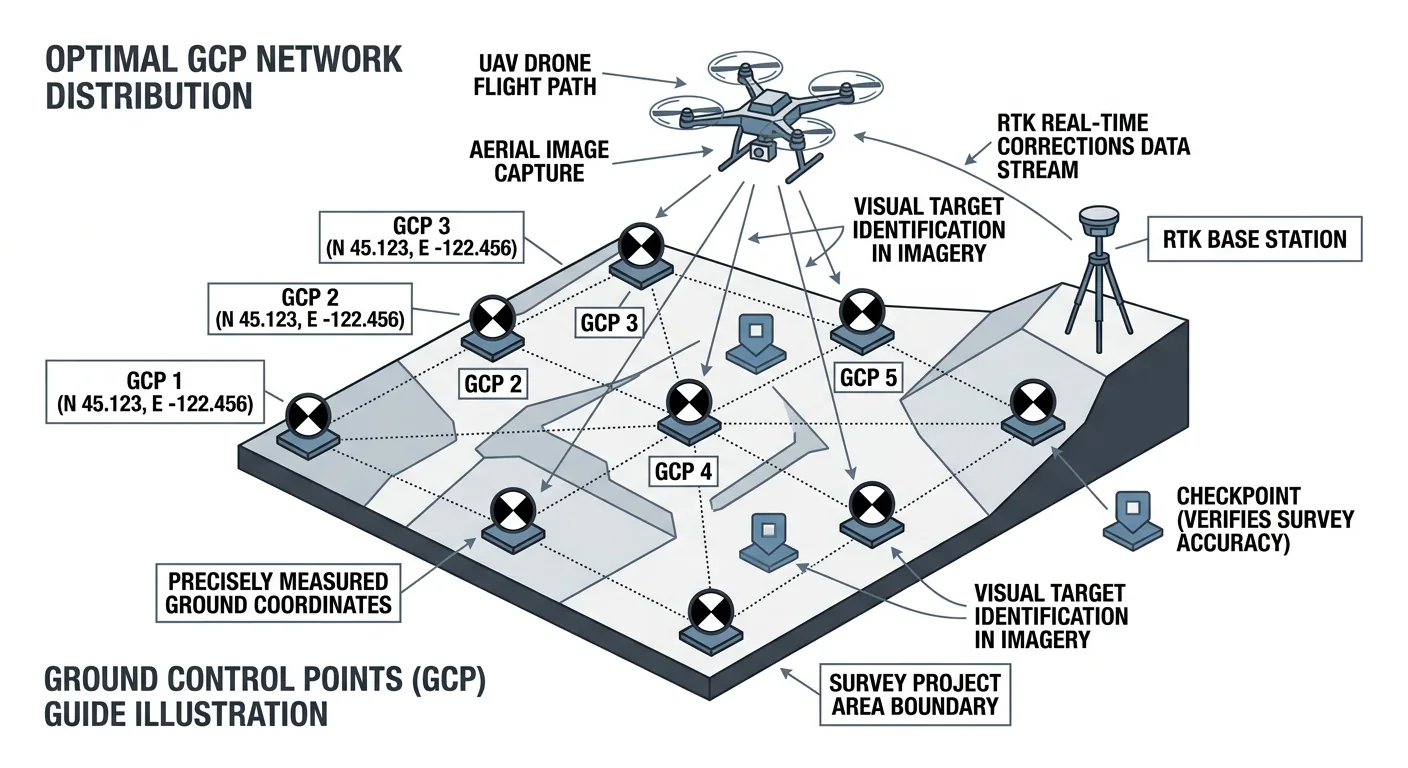

Ground Control Points for Drone Surveys: How Many, Where, and Why
How many ground control points does your drone survey actually need? An experienced GIS professional breaks down GCP count, placement, and checkpoint validation.
Drone Mapping · Photogrammetry · LiDAR · GIS Workflows
Most drone resources stop at the flight. RangePointGeo documents the complete workflow — from mission planning and GCP methodology to photogrammetry processing, LiDAR analysis, and delivering survey-grade geospatial products.
There are plenty of drone content creators online. Most are pilots who picked up GIS along the way.
RangePointGeo is written by Eric — a GIS scientist first, drone operator second. That difference matters when accuracy, deliverable quality, and professional credibility are on the line.
From flight planning and GCP setup to point cloud classification and ArcGIS integration — every step, explained by someone who does it professionally.
M.S. in GIS. FAA Part 107. 10+ years of professional geospatial work. 5 years of drone mapping deliverables for real clients. Everything here comes from field practice.
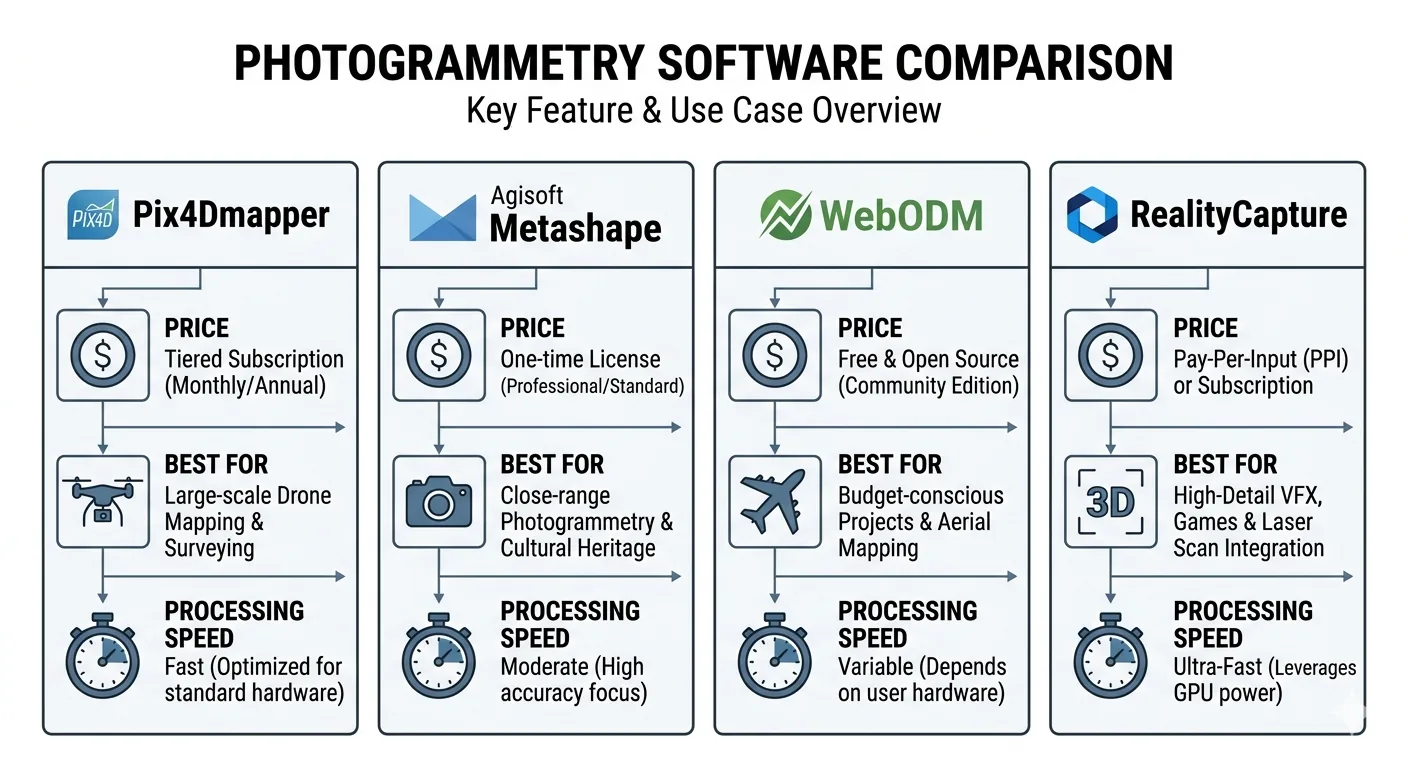
Pix4D, Agisoft Metashape, WebODM, DJI Terra, ArcGIS Pro, QGIS — the concepts here translate across any platform, so you understand the workflow regardless of what software you're using.
Not sure where to start? Find your starting point →
Deep coverage of photogrammetry processing, GCP workflows, accuracy validation, and producing deliverables that meet professional standards.
Reference material for understanding drone-derived data — how it's collected, what the accuracy numbers mean, and how to work with it in ArcGIS or QGIS.
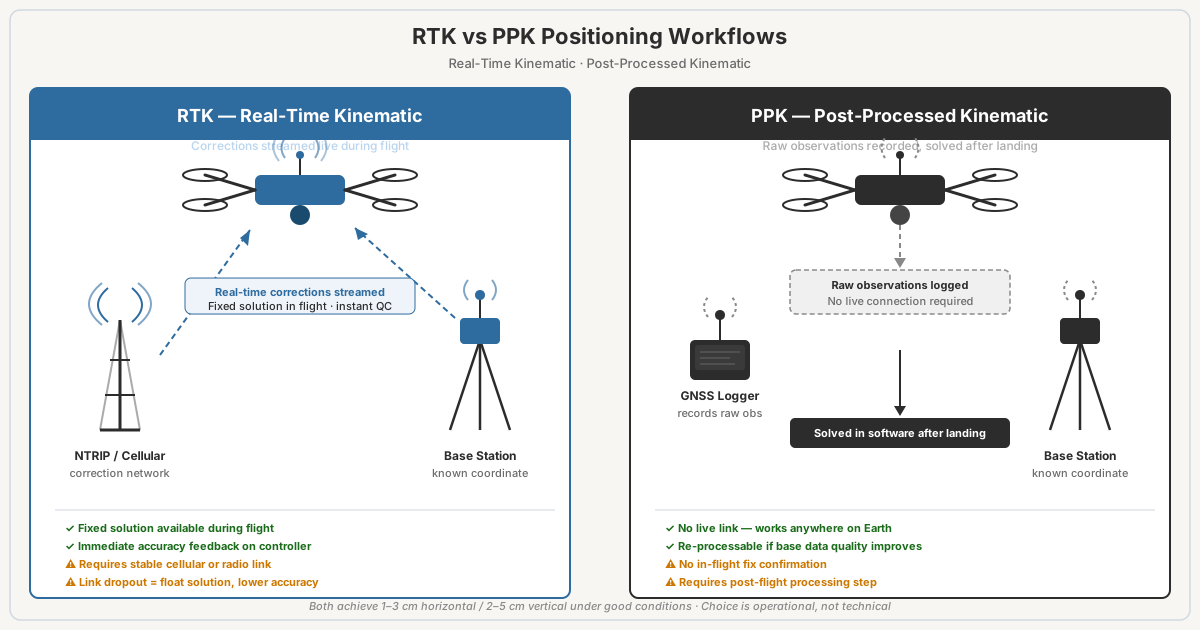
Technical documentation on RTK/PPK workflows, GCP methodology, accuracy reporting, and integrating drone data into survey-grade deliverables.
Practical guidance on drone data integration — coordinate systems, accuracy standards, data handoff formats, and GIS workflow compatibility.
Topics covered in depth
Find your entry point or go straight to the reference library. No vendor pitch — just documented workflows from a working professional.
About the Author
Eric holds a Master of Science in GIS and has spent over a decade working in professional geospatial roles — producing topographic surveys, LiDAR deliverables, and remote sensing analysis for engineering firms, government agencies, and environmental consultants.
He added drone mapping to his toolkit five years ago and has since built workflows for construction site monitoring, volumetric analysis, corridor mapping, and multispectral surveys.
He built RangePointGeo because he couldn't find a resource that bridged both worlds — that covered drone acquisition with the same rigor as the GIS deliverable side. So he wrote it himself.
How many ground control points does your drone survey actually need? An experienced GIS professional breaks down GCP count, placement, and checkpoint validation.
Processing drone data is one of the most resource-intensive tasks you can ask a computer to do. Here's exactly what CPU, GPU, RAM, and storage you need for photogrammetry workloads — and why.
Drone mapping has revolutionized spatial data collection — but it introduces real risks that require systematic management. Here's a practical framework for the four primary risk categories every operator needs to understand.